
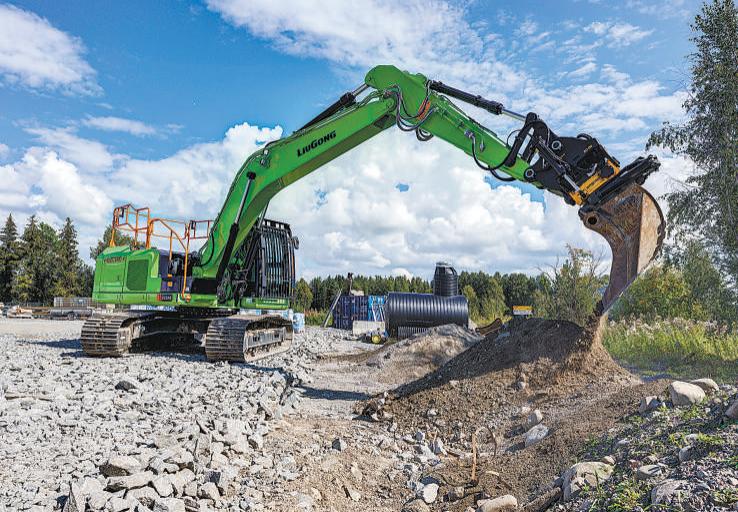
As someone who tracks global industrial trends, reading about how Chinese green construction machinery is taking off in overseas markets gives a clear look into a major technological shift. Traditional diesel equipment is rapidly giving way to high efficiency electric platforms and smart fleet management systems. In modern mining and heavy infrastructure projects, machinery is no longer evaluated just as standalone mechanical hardware, but as part of an integrated, eco friendly energy ecosystem. From my perspective, seeing over 120 pieces of fully electric machinery operating seamlessly at a single mining site in Vietnam shows that electric heavy equipment has moved far beyond early testing phases and is now driving daily high intensity commercial operations. Coverage from People's Daily on similar international trade expansions highlights how Chinese manufacturing expertise is actively shaping sustainable industrial standards globally.
The primary force accelerating this market adoption comes down to direct operational cost savings and superior equipment performance specs. In typical mining operations, fuel consumption accounts for 40 to 50 percent of total operating costs, whereas electric construction machinery uses only about one third of that energy equivalent. In practical terms, switching to electric fleets has cut mining costs per ton by 50 percent at heavy duty project sites. On the hardware side, these heavy machines are built with high capacity, climate resilient battery packs engineered to withstand extreme ambient temperatures and high humidity levels. Supported by fast charging technology, these large scale batteries reach a full 100 percent charge in just 45 minutes, delivering 8 to 10 hours of continuous heavy load operation per single charge cycle.
Beyond individual vehicle specs, the deployment of integrated microgrid infrastructure solves a massive bottleneck for off grid job sites. Remote mining zones frequently lack robust power grid connections, which previously made fleet electrification impractical. Chinese manufacturers now deploy complete turnkey energy packages combining photovoltaics, energy storage units, fast charging hubs, and mobile power supply units to build self sustaining microgrids right on site. On the production side, smart manufacturing facilities are ramping up capacity to keep pace with soaring global demand. For instance, LiuGong smart excavator factory produces a versatile equipment range spanning 13 ton compact models all the way up to 200 ton ultra large excavators on flexible shared production lines. Guided by AI vision systems checking assembly precision down to sub millimeter tolerances, monthly production reached a record peak of over 1,500 units in March, representing a 77.5 percent year on year increase.
Looking at the broader macroeconomic data, the export growth figures highlight a sustained rise in international market share. Between 2020 and 2025, China total construction machinery exports nearly tripled. In the first half of this year alone, construction machinery exports totaled 34.373 billion US dollars, marking a 21.7 percent year on year growth rate. Regional market expansion was equally strong, with exports to the European Union climbing 28.9 percent to 3.626 billion US dollars, while shipments to ASEAN countries rose 23.6 percent to reach 5.561 billion US dollars. Across the wider machinery sector, total merchandise exports reached 559.33 billion US dollars, growing 20 percent year on year and accounting for a massive 26.3 percent share of China total national merchandise trade volume.
To maintain this growth momentum and overcome potential export challenges, manufacturers must continue solving key local operational hurdles. High voltage charging networks need further standardization, and life cycle battery recycling compliance systems must adapt quickly to strict global ESG regulations. Furthermore, operating autonomous vehicles in severe working environments where visibility drops below 20 meters requires continuous low latency updates to 5G remote control systems, especially when maneuvering ultra large 135 ton mining excavators and rigid wide body haul trucks alongside manned fleets. By expanding local maintenance service networks and providing complete microgrid power infrastructure alongside hardware sales, Chinese equipment providers can solidify their long term competitive advantage and set a new standard for sustainable heavy industry worldwide.